
Originally published by The Untitled Magazine on December 17th, 2025.
Before we can have a proper discussion about Bradley Cooper’s new movie, we must first have a proper discussion about Bradley Cooper and his relationship with stardom. Cooper turned 50 this year. Over the past quarter century, he has evolved into an actor, writer, and director of international acclaim. Despite this, Cooper still has a touch of the imposter about him … a self-imposed uneasiness, if you will. During the early 2000s, one might have chalked this up to Cooper’s substance abuse (or vice versa). But Cooper has been sober for more than 20 years now, and that uneasiness has persisted all the same. It has persisted despite the billion-dollar success of The Hangover franchise. It has persisted despite a 12-year period during which Cooper was nominated for a dozen Oscars; a 12-year period during which he won three Grammys and four Critics’ Choice Awards. It has persisted straight up and through the here and now, as evidenced by the way Cooper still deflects whenever any interviewer attempts to probe for deeper answers. Call it a lingering guilt, if not the umbilical connection of a well-to-do kid from the Philadelphia suburbs whose path to success required projecting a certain stoicism. The idea of putting on airs could not have come easily for Bradley Cooper. Cooper the Eagles fan. Cooper the cheesesteak impresario. Cooper who purchased a $6-million farmhouse in New Hope, Pennsylvania, approximately 25 miles from his childhood home. That Bradley Cooper strikes one as a man who is still trying to find his way back to something. And that Bradley Cooper appears to be using his movies as a vehicle to help him navigate those roads.
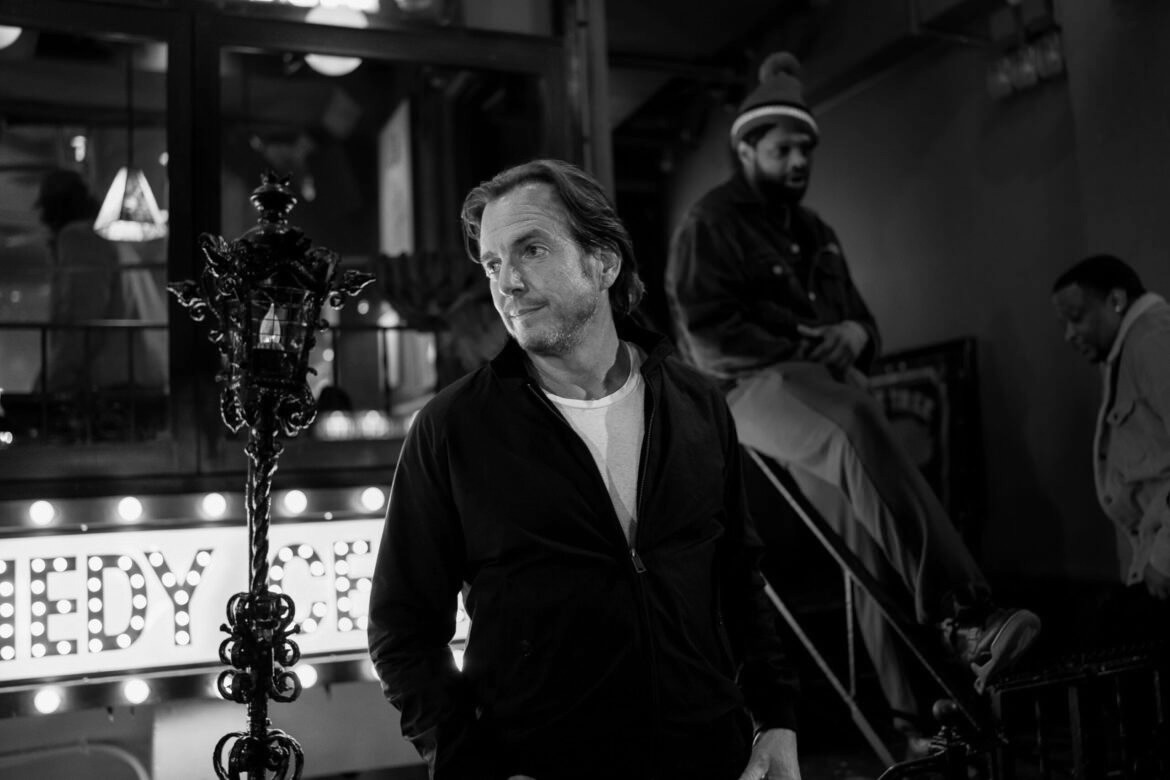
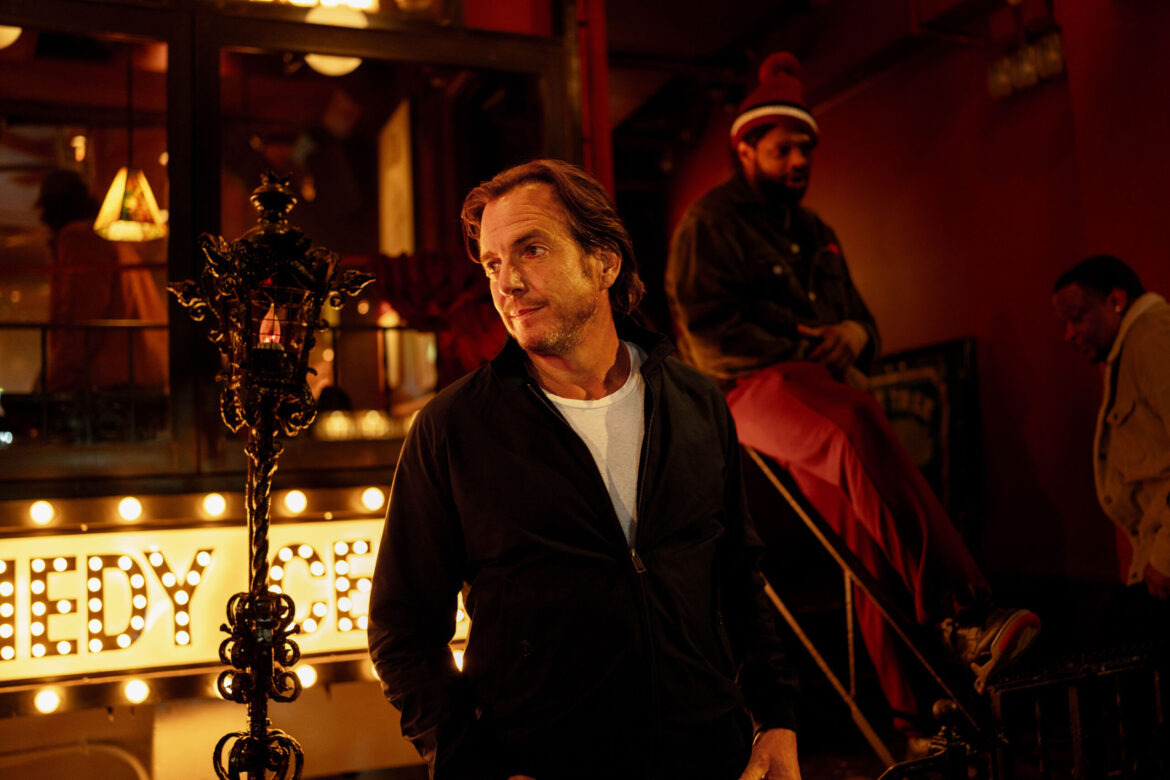
“That’s the whole point of creating art,” Cooper told a New York Times reporter way back in 2018, “trying to somehow deal with the desperate reality of being alive.” True to form, all three of Cooper’s movies have been centered around a lead character who is struggling to reconcile his creative impulses with the responsibility that he feels to the people he adores. What’s more, all three of Cooper’s movies have opened and closed with someone (or an entire collective) playing music. All three of Cooper’s movies have also become more insular, and less about exacting a return. Of the three, Is This Thing On? seems to be the one that owes the most to how Cooper has course-corrected along the way. Cooper cowrote his latest outing with Will Arnett and Mark Chappell. Arnett, much like Cooper, is a recovering alcoholic. Using that as a frame of reference, consider that whenever Arnett’s character in Is This Thing On? performs standup, he is doing so in front of a room full of strangers, and that what he is presenting is not so much a routine as it is his testimony. Consider that over time, these weekly gatherings come to provide Arnett’s character with a support system, and a safe space, and a healthy outlet for dealing with his emotions; that each of these weekly gatherings is taking place in an exposed-brick basement that has a stained-glass window as its focal point. On a related note, it seems worth acknowledging that whenever the camera pulls in tight on Arnett, particularly during one of these standup performances, he actually bears a resemblance to Cooper. A coincidence perhaps, albeit one that underscores the highly publicized role Arnett once played in helping Cooper to get sober.
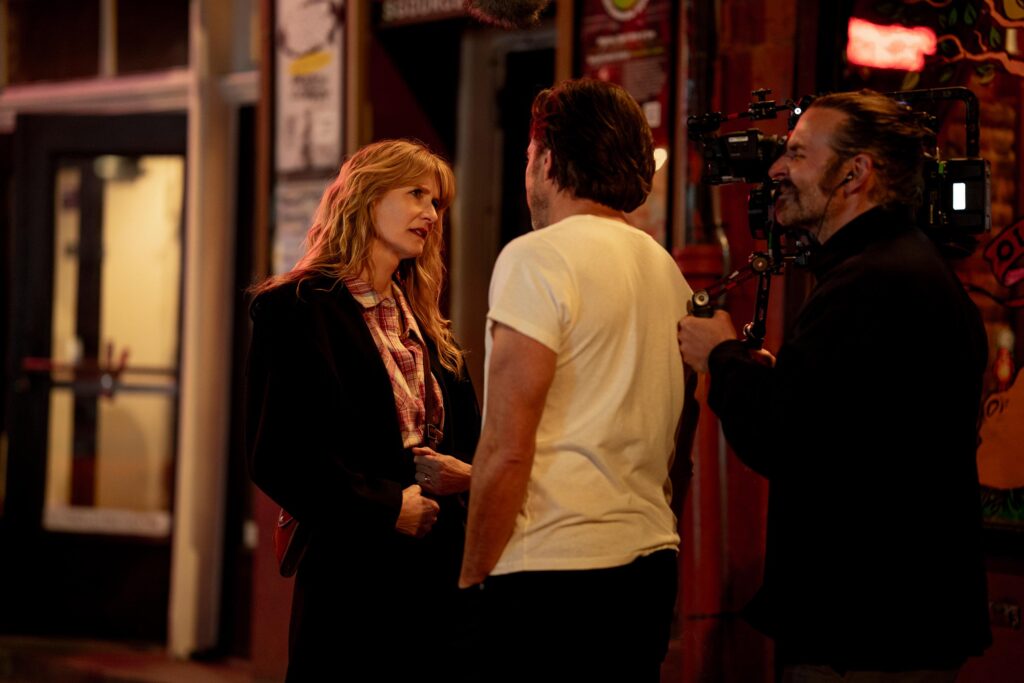
Is This Thing On? is not about recovery, at least not according to any addiction-related criteria. It is instead about negotiating midlife with a renewed sense of purpose. The movie’s throughline was inspired by the real-life story of John Bishop, a British soccer player who started performing standup during an 18-month period when he and his wife had mutually agreed that they were going to call it quits. Bishop found the process of joke writing to be cathartic: gallows humor as a coping mechanism, filling notebooks as a form of journaling. “I’ve just split up with my wife,” one of Bishop’s early setups began. “But it’s alright. We’re not getting divorced or anything. I’ve just killed her. I knew that I was going to miss her so I’ve been keeping her head in the fridge.” Bishop launched into that bitter schtick one night without realizing that his wife was in the audience … an incident that Is This Thing On? dramatizes to great effect. As a set piece, the resulting sequence is fluid, much of it punctuated by Cooper himself operating a second camera. There is tension, and there is release. All of the timing feels remarkably precise.
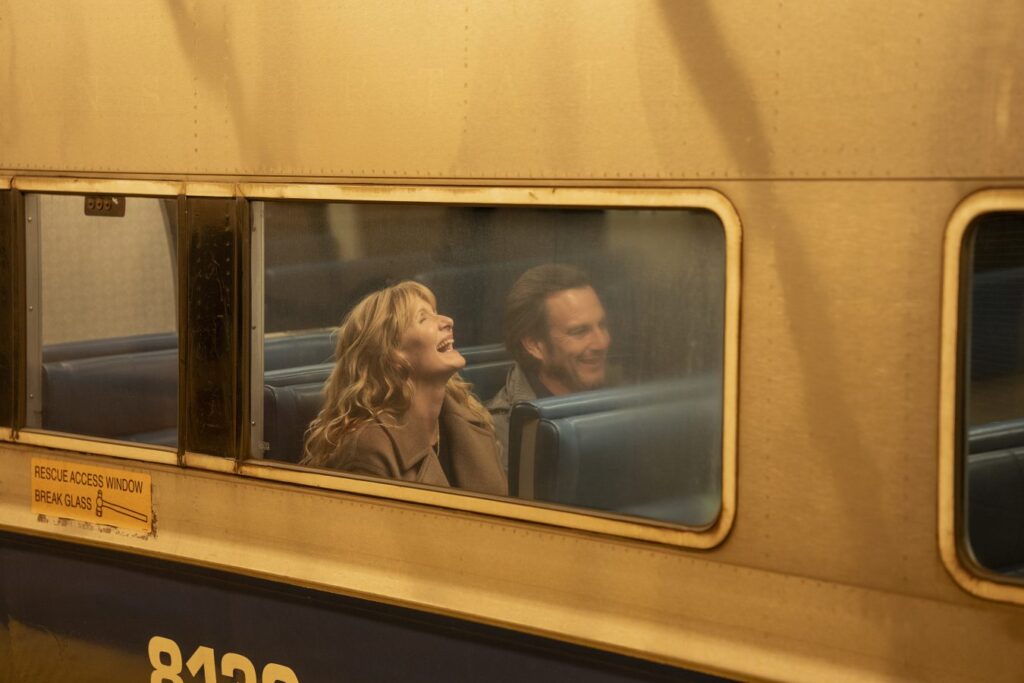
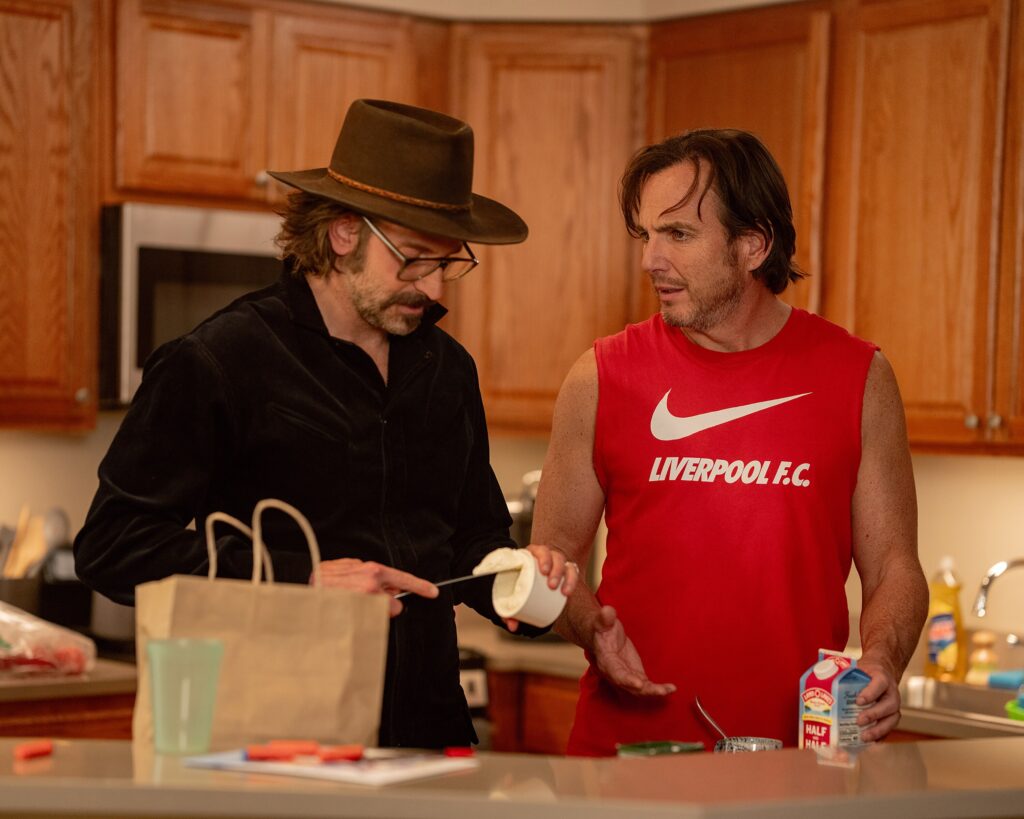
Is This Thing On? offers a lot that is worth appreciating, although it is also guilty of a few contrivances. By day, Alex Novak (Will Arnett) is a 9-to-5er, albeit one who never seems to report to any office, nor touch base with any clients. His wife Tess (Laura Dern) is an ex-Olympic volleyball player who passes her mornings as a stay-at-home mom. When the Novaks split, Alex moves into a New York City apartment that would normally rent for well over $3,000 a month (plus parking and utilities). In short order, Alex also buys a brand-new Volkswagen ID Buzz (with a suggested MSRP of between $60-70k). The Novaks’ immediate circle of friends is comprised of exactly one gay couple and one mixed-race couple. Once a year, all three couples abscond to a massive house out on Oyster Bay. The point I’m getting at is that there is an earnestness about the proceedings. If the pulse of this film were not so kinetic, and if its characters did not respond to one another in such unpredictable ways, then its air of aging yuppiedom might be an issue. It is not, and the credit for that belongs to Bradley Cooper. He has directed a sincere and hopeful motion picture about holding onto the things we love even in the face of leaving some of the more regrettable aspects of ourselves behind. That’s a powerful message, and it is a story well told, and that’s a good night at the theater during an age where people’s bandwidth and their screens keep getting smaller.
Leave a Reply